
What is a Sighted Guide?
Sighted guides facilitate independence for visually impaired individuals, offering crucial assistance in navigating environments and accessing information, as demonstrated by inclusive tours.
Definition and Core Role
A sighted guide serves as a human extension of mobility and access for a visually impaired person. Their core role transcends simple physical direction; it’s about fostering independence and participation. This involves providing detailed verbal descriptions of surroundings, identifying obstacles, and ensuring safe navigation across diverse terrains – from bustling urban landscapes to tranquil rural settings.
Guides empower individuals to engage fully in educational institutions, cultural events, and leisure activities. They adapt communication to individual needs, simplifying complex information and utilizing tools like audio description to enhance understanding. Ultimately, a sighted guide’s function is to bridge the gap between visual perception and accessibility.
Historical Context of Sighted Guiding
Historically, informal sighted guiding existed for centuries, rooted in basic human compassion and assistance. However, formalized approaches emerged alongside increasing awareness of visual impairment and accessibility needs; The development of structured training programs, particularly post-World War II with returning veterans, marked a turning point.
Early efforts focused on rehabilitation and independent living skills. International analysis spurred advancements, alongside a growing understanding of accessible interface design for education. Today, guided tours for people with disabilities, like those offered by the Zotov Centre, demonstrate a continued evolution towards inclusive practices and refined techniques in sighted guiding.

The Sighted Guide’s Responsibilities
A sighted guide’s core duties involve ensuring safety and independence through physical assistance, detailed environmental descriptions, and proactive obstacle identification for the visually impaired;
Providing Physical Guidance
Effective physical guidance involves establishing a comfortable and safe connection, typically using a gentle touch on the elbow or upper arm – never grabbing. The guide should walk slightly ahead, allowing the individual to maintain a natural stride and sense of direction.
Communication is key; clearly announce steps, curbs, or changes in terrain. Adapting to the individual’s pace and preferences is crucial, respecting their desired level of independence. This technique enables safe navigation, fostering confidence and reducing anxiety while traversing various environments. It’s about partnership, not control.
Describing the Environment
Detailed verbal descriptions are fundamental to sighted guiding, painting a “picture in words” for the visually impaired individual. This extends beyond simply identifying obstacles; it includes conveying the layout of a room, the presence of people, and the overall atmosphere.
Consider details like furniture arrangement, lighting conditions, and potential hazards. Audio description guidelines, like those from ADLAB, emphasize clarity and conciseness. Providing contextual information – “a café with several small tables” – is more helpful than simply stating “tables.” This fosters understanding and independence.
Obstacle Identification and Communication
Proactive obstacle identification is paramount for a sighted guide. This involves scanning the path ahead for potential hazards – uneven surfaces, low-hanging branches, or approaching pedestrians. Clear and concise communication is vital; use precise language like “step up,” “slight incline,” or “person approaching on your right.”
Avoid vague terms like “watch out!” Instead, describe the obstacle and its location. Consistent communication builds trust and allows the visually impaired individual to anticipate changes in the environment, fostering a sense of security and control during navigation.
Navigating Different Terrains
Sighted guides must adapt their techniques based on the terrain. Urban environments demand awareness of traffic, curbs, and pedestrian flow. Rural settings require identifying changes in ground texture – grass, gravel, or mud – and communicating these shifts.
Guides should adjust their pace and grip accordingly, providing extra support on uneven surfaces. Describing inclines, declines, and potential hazards like tree roots is crucial. Effective navigation prioritizes safety and provides the visually impaired individual with a clear understanding of the surrounding landscape.
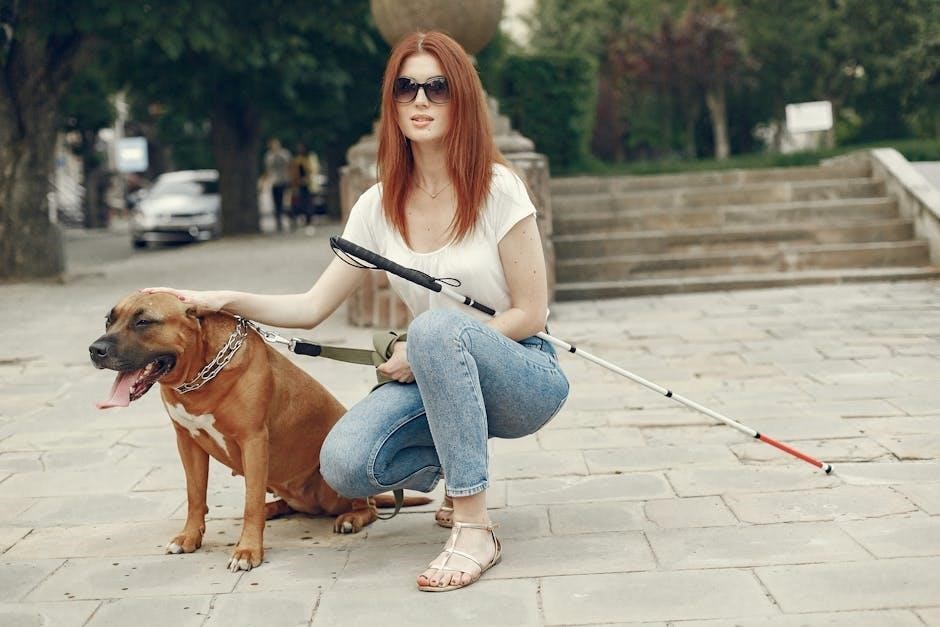
Qualities of an Effective Sighted Guide
Effective sighted guides possess strong communication skills, patience, and observational abilities, ensuring safety and fostering independence for visually impaired individuals through careful assistance.

Communication Skills
Clear and concise communication is paramount for a sighted guide. This involves providing verbal descriptions of surroundings, potential obstacles, and changes in terrain with precision. Guides must adapt their language, simplifying complex information for easier comprehension, especially for students with visual impairments.
Active listening is equally crucial, allowing the guide to understand the individual’s needs and preferences. Effective guides offer feedback, confirming understanding and encouraging questions. They should also be adept at non-verbal cues, recognizing when additional explanation or support is required.
Ultimately, strong communication builds trust and empowers the visually impaired person to navigate confidently, fostering a collaborative and respectful partnership.
Patience and Empathy
Sighted guiding demands significant patience, as individuals may navigate at different paces and require repeated explanations. Empathy is vital – understanding the challenges and frustrations associated with vision loss fosters a supportive and respectful relationship. A guide must be sensitive to the individual’s emotional state, offering encouragement and reassurance.
Avoiding assumptions and allowing the person to maintain control over their journey are key. Guides should refrain from rushing or taking over, instead providing gentle guidance and allowing time for independent decision-making.
Genuine empathy builds trust and empowers the individual, promoting a positive and collaborative guiding experience.
Awareness and Observational Skills
Exceptional awareness of the surroundings is paramount for a sighted guide. This extends beyond simply identifying obstacles; it involves anticipating potential hazards, assessing surface changes, and noting details the visually impaired person cannot perceive. Observational skills are crucial for gauging the individual’s comfort level and adapting guidance accordingly.
A guide must scan the environment for upcoming steps, curbs, crowds, and changes in terrain.
Proactive observation allows for clear and timely communication, ensuring a safe and confident navigation experience. Paying attention to subtle cues and environmental factors enhances the overall effectiveness of the guiding partnership.
Responsibility and Reliability
A sighted guide assumes a significant responsibility for the safety and well-being of the person they are assisting. Reliability is non-negotiable; commitments must be honored, and punctuality is essential. The guide must maintain focus and avoid distractions during the guiding process, prioritizing the individual’s needs above all else.
This includes a duty of care, ensuring the person is protected from harm and feels secure throughout the journey.
Consistent and dependable support builds trust and fosters independence, empowering the visually impaired individual to navigate their world with confidence.

Training and Certification for Sighted Guides
Formal programs equip guides with essential skills, covering safe navigation techniques and effective communication strategies for assisting visually impaired individuals confidently.
Formal Training Programs
Comprehensive training programs are vital for aspiring sighted guides, offering structured curricula designed to instill the necessary skills and knowledge. These programs often incorporate practical exercises simulating real-world scenarios, focusing on safe navigation techniques and effective communication protocols. They delve into understanding various visual impairments and appropriate guiding methods, ensuring sensitivity and respect for the individual’s independence.
Furthermore, these courses frequently cover legal and ethical considerations, emphasizing the duty of care and confidentiality. Accessibility features within public spaces and the complementary role of assistive technologies, like audio description, are also explored. Successful completion often leads to certification, validating the guide’s competence and commitment to providing safe and supportive assistance.
Essential Skills Covered in Training
Core training components emphasize proficient communication, including clear and concise verbal descriptions of surroundings and potential obstacles. Guides learn proper physical guiding techniques, ensuring a secure and comfortable experience for the individual. A crucial element is developing heightened awareness and observational skills to anticipate hazards and navigate diverse terrains effectively.
Training also focuses on simplifying complex information for visually impaired individuals, adapting to their specific needs. Understanding the principles of color contrast and utilizing accessible interfaces are also key. Ultimately, programs aim to cultivate responsible and reliable guides capable of fostering independence and confidence.
Continuing Education and Updates
Sighted guiding isn’t static; ongoing professional development is vital. Updates on assistive technologies, like audio description guidelines (ADLAB), and evolving accessibility features in public spaces are crucial. Guides benefit from staying informed about best practices in inclusive program design, mirroring initiatives like those at the Zotov Centre.
Refresher courses reinforce communication skills and ethical considerations, ensuring guides remain sensitive to the needs of visually impaired individuals. Accessing resources detailing visual impairments and educational adaptations keeps skills current. Continuous learning fosters a commitment to providing the highest quality support.

Legal and Ethical Considerations
Sighted guides have a duty of care, demanding responsible conduct and respecting the independence of those they assist, upholding confidentiality at all times.
Duty of Care
A sighted guide’s duty of care is paramount, requiring vigilance and proactive risk assessment to ensure the safety and well-being of the person they are assisting. This extends to anticipating potential hazards within the environment, clearly communicating those risks, and providing appropriate physical support. Guides must prioritize the individual’s safety above all else, adapting their approach to suit varying levels of vision impairment and individual needs.
Furthermore, this duty encompasses understanding and adhering to relevant legal guidelines and best practices related to assisting individuals with disabilities, ensuring responsible and ethical conduct throughout the guiding interaction. It’s about fostering a secure and confident experience.
Confidentiality
Maintaining confidentiality is a cornerstone of ethical sighted guiding practice. Guides often gain personal insights into the individual’s life, abilities, and challenges during their interactions. Sharing this information without explicit consent is a breach of trust and a violation of privacy.
Discretion is vital; discussions about the person being guided should be limited to necessary communication with other professionals involved in their care, always with their permission. Respecting their autonomy and maintaining a professional boundary builds a strong, trusting relationship, essential for effective guidance and support.
Respecting Independence
A core principle of sighted guiding is fostering, not hindering, the individual’s independence. The guide’s role isn’t to do for the person, but to empower them to navigate their surroundings with confidence. Over-assistance can inadvertently diminish self-reliance and create dependency.
Offering support only when needed, allowing the individual to lead, and encouraging them to utilize their existing skills are crucial. Guides should promote self-determination, respecting the person’s right to make their own choices, even if those choices involve taking calculated risks.

Sighted Guiding in Different Settings
Sighted guiding adapts to diverse environments – urban streets, rural trails, schools, and leisure activities – ensuring accessibility and participation for visually impaired individuals.
Urban Environments
Navigating cities presents unique challenges, demanding skilled sighted guides who can adeptly manage complex pedestrian traffic, intersections, and public transportation systems. Guides must provide detailed verbal descriptions of street layouts, potential obstacles like construction zones or uneven pavements, and the location of essential amenities.
Effective communication is paramount, ensuring the visually impaired individual understands the surrounding environment and feels confident in their movement. This includes relaying information about traffic signals, approaching vehicles, and changes in elevation. Simplifying complicated information, as advised for partially sighted students, is crucial for comprehension.
Furthermore, guides assist with accessing services, locating specific addresses, and interpreting signage, fostering independence and participation in urban life. They enable access to information printed on physical documents, bridging gaps in accessibility.
Rural and Outdoor Settings
Guiding in natural environments requires adapting techniques to uneven terrain, varying weather conditions, and the absence of structured pathways. Sighted guides must meticulously describe the landscape – changes in ground surface, vegetation, and potential hazards like rocks or tree roots.
Awareness and observational skills are heightened, anticipating obstacles not readily apparent. Communication shifts to encompass broader environmental cues, such as wind direction or sounds of wildlife. Guides facilitate participation in outdoor activities, ensuring safety and enjoyment.
They assist with navigating trails, identifying landmarks, and interpreting natural features, promoting independence and connection with the outdoors. Accessibility features, even in natural spaces, are vital, and guides help bridge gaps where they exist.
Educational Institutions
Sighted guides within schools and universities play a pivotal role in fostering inclusive learning environments. They assist students with visual impairments in navigating campus layouts, locating classrooms, and accessing learning resources. Simplifying complex information and applying models are key strategies, ensuring comprehension for visually impaired students.
Guides facilitate participation in activities like lab work, physical education, and field trips. They describe visual materials, assist with note-taking, and aid in utilizing assistive technology.
Distance learning opportunities are enhanced through sighted guide support, bridging gaps in accessibility. Creating accessible interfaces for educational tools is crucial, and guides provide valuable feedback in this process.
Cultural and Leisure Activities
Sighted guides significantly broaden access to cultural and leisure experiences for visually impaired individuals. They enable participation in activities like museum visits, concerts, sporting events, and film screenings – enriching lives through shared experiences. Audio description, as highlighted in ADLAB guidelines, complements guiding, providing detailed auditory narratives.
Guides describe exhibits, performances, and surroundings, fostering understanding and enjoyment. They assist with navigating venues, locating seating, and ordering refreshments.
Inclusive programs, like those offered by the Zotov Centre, demonstrate a commitment to accessibility. Streaming services and ZDF’s Mediathek are becoming more accessible, but guides still enhance the experience.

Assistive Technology and Sighted Guiding
Assistive technologies, like audio description and accessible interfaces, work alongside sighted guides to provide comprehensive support for visually impaired individuals’ independence.
Complementary Tools
Sighted guiding isn’t replaced by technology, but enhanced by it. Tools like screen readers and magnification software empower individuals, while sighted guides offer nuanced environmental awareness. Accessible document solutions, such as those covered by patent US 0010276065, aid information access.
Audio description, exemplified by ADLAB guidelines, bridges gaps in visual content, complementing a guide’s real-time explanations. These technologies don’t diminish the human connection; instead, they create a synergistic approach, fostering greater independence and a richer experience for the visually impaired person. They allow guides to focus on safety and complex navigation.
Audio Description and its Role
Audio description serves as a vital complement to sighted guiding, particularly when experiencing visual media or complex environments. Guidelines like those from ADLAB ensure quality and accessibility, “painting pictures in words” where visual cues are missing. This is especially relevant in cultural and leisure settings, like films, series, and sporting events available through ZDF’s streaming network.
A sighted guide can enhance audio description by providing personalized, real-time context and addressing specific needs. It’s not a replacement for human interaction, but a powerful tool that expands understanding and enriches the overall experience for the visually impaired individual.
Accessibility Features in Public Spaces
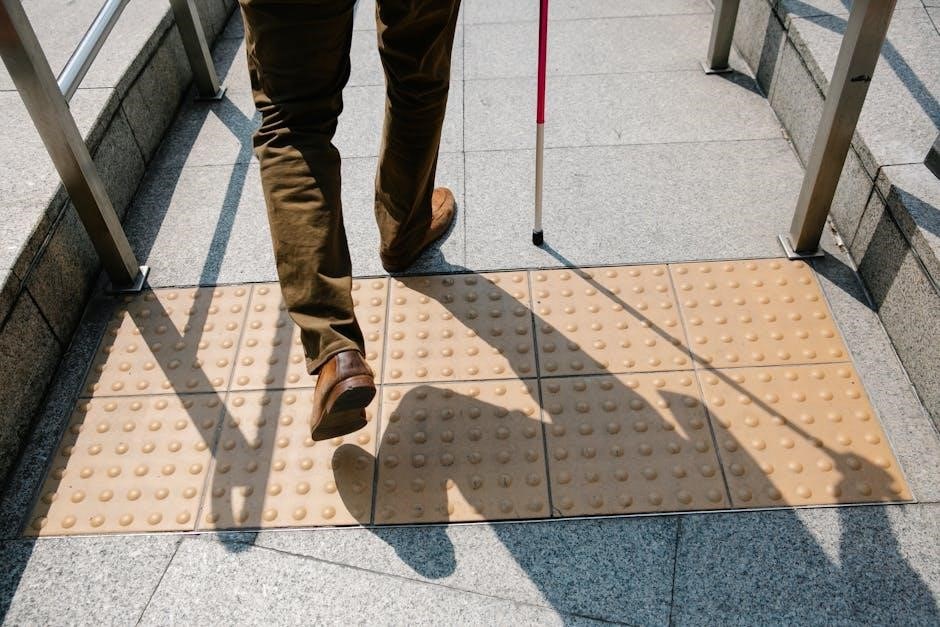
Accessibility features in public spaces significantly aid sighted guiding, though they don’t eliminate the need for a human guide. Features like tactile paving and clear signage contribute to independent navigation, but often require interpretation and explanation. A sighted guide can bridge the gap, describing layouts and potential hazards not readily apparent.
Understanding how these features function – and their limitations – is crucial for effective guiding. The Zotov Centre’s inclusive tours demonstrate a commitment to accessibility, but even well-designed spaces benefit from personalized assistance, ensuring a safe and confident experience for all.

The Future of Sighted Guiding
Technological advancements and evolving needs will reshape sighted guiding, demanding adaptable skills and a focus on maximizing independence through combined approaches.
Evolving Needs of Visually Impaired Individuals
The demands placed on sighted guides are shifting, reflecting a growing emphasis on inclusivity and self-determination for visually impaired individuals. Access to education, utilizing accessible interfaces and simplified information – crucial for partially sighted students – necessitates guides adept at adapting to diverse learning environments.
Furthermore, participation in cultural and leisure activities, alongside advancements in distance learning tools, requires guides who can facilitate engagement with a broader range of experiences. The expectation isn’t merely physical navigation, but also enabling full participation and access to information, mirroring the goals of inclusive programs like those offered at the Zotov Centre.
Ultimately, the future guide will be a facilitator of independence, not simply a physical escort.
Technological Advancements
Emerging technologies are reshaping the role of the sighted guide, offering complementary tools rather than replacements. Audio description, as exemplified by ADLAB guidelines and streaming services like ZDF, enhances environmental understanding, lessening reliance on constant verbal descriptions. Accessibility features in public spaces, coupled with advancements in assistive technology, empower greater independence.
However, technology isn’t a panacea. Sighted guides remain vital for navigating unpredictable situations and providing nuanced support. The integration of these tools requires guides skilled in their application, ensuring seamless access to information printed on physical documents (US patent US 0010276065) and fostering a more inclusive experience.